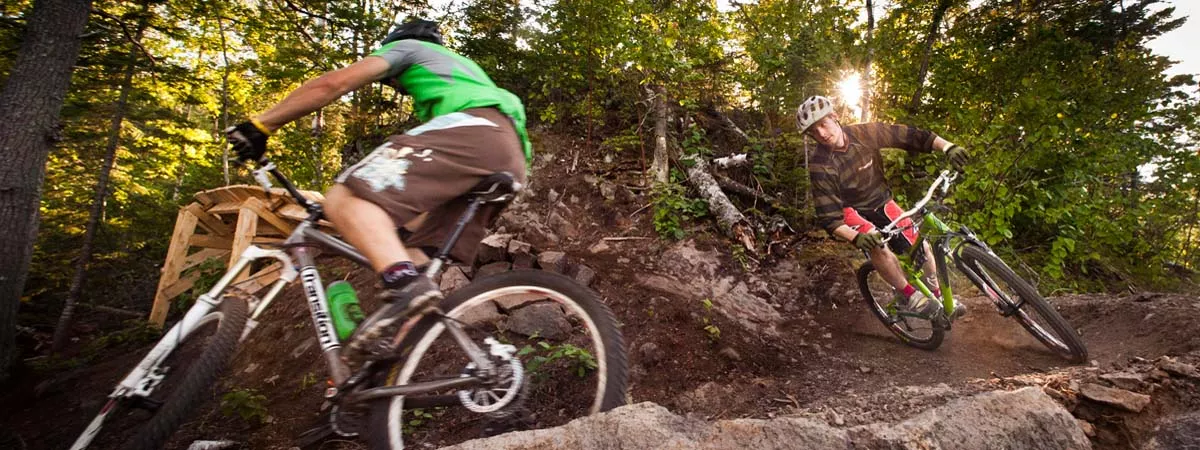
Mountain Bike Adventures
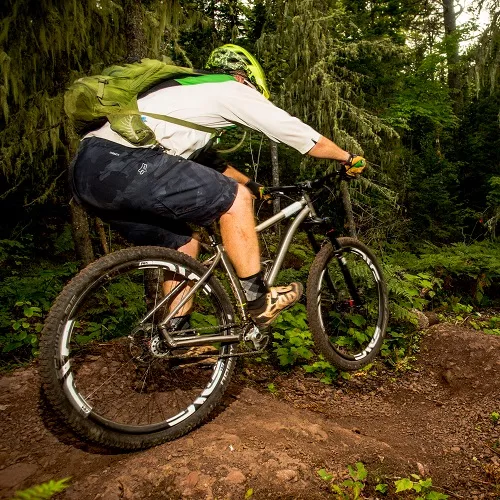
Whether new to mountain biking or an expert, our single track guided tours offer something for everybody. Professional staff will customize your ride through enchanted forests, Lake Superior overlooks and historical sites!
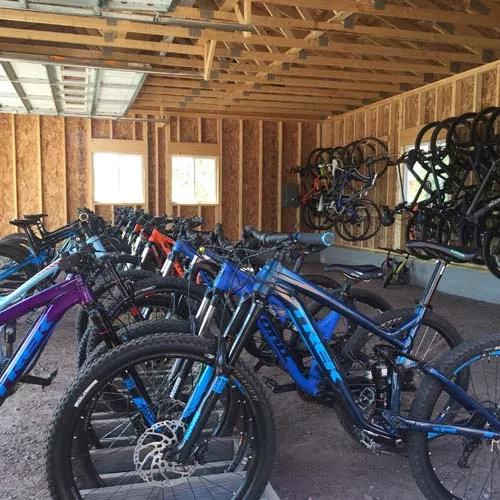
Look no further, we have one of the best selections of mountain bike rentals in Michigan. We pride ourselves on the fact that we sell the majority of our used rental bikes at the end of each season and in turn, reinvest in new, state-of-the-art bikes at the start of every year to ensure a high-quality experience for our Upper Peninsula mountain biking customers!
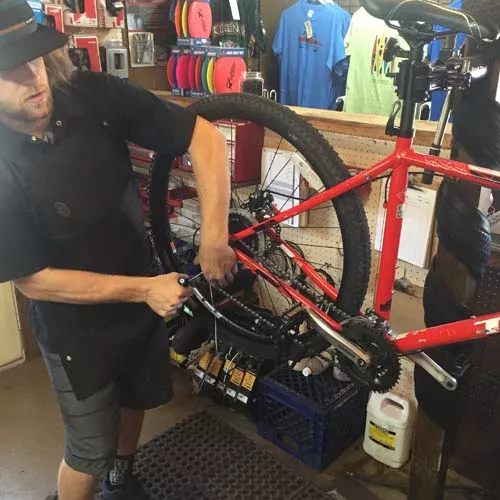
Keweenaw Adventure Company is Michigan’s northern-most bike shop. Perhaps best described as an “outpost shop at the end of the road”, we specialize in the needs of the traveling cycling enthusiast. With our help, they are sure to experience the very best Copper Harbor mountain biking available.
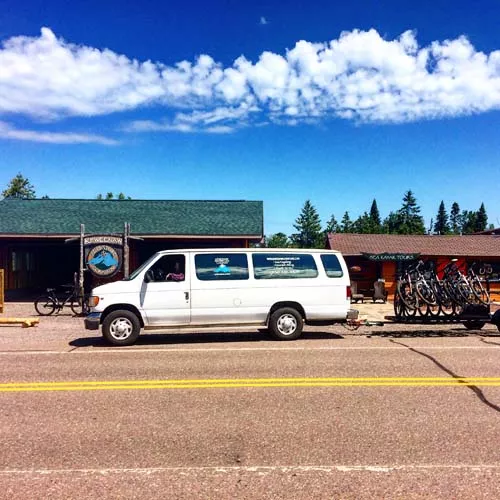
Ready For Mountain Bike Downhill Runs? Because there is no ski area with a chairlift in Copper Harbor, our shuttle is the next best way to get you and your mountain bike to the top of the mountain without having to pedal!
The Copper Harbor Mountain Bike Trails were designated as an IMBA “Bronze Level” Ride Center in October of 2011. This designation was trumped in 2012 with that of an IMBA “Silver Level” Ride Center, which ranks our trails among the top systems in the world!